At the 2025 UAS Challenge, O.L.I.V.I.A. achieved third place overall and also received the Safety Award. The recognition was linked to the team's particular attention to safety, with the redundant architecture of the propulsion and control systems being one of the defining aspects of the project.
18 km
Distance covered
15.5 m/s
Max. velocity
1.75 kg
Payload capacity
The competition required designing a system capable of transporting humanitarian aid to areas isolated by natural disasters, leading the team to deal not only with the aircraft’s performance, but also with requirements for range, reliability, and speed of deployment.
The flight mission involved autonomous navigation through a series of waypoints defined by GPS coordinates, reaching the delivery area, releasing the payload, and then opening the parachute. Unlike previous projects, OLIVA was designed to operate completely autonomously throughout all phases of the mission, including takeoff and landing.
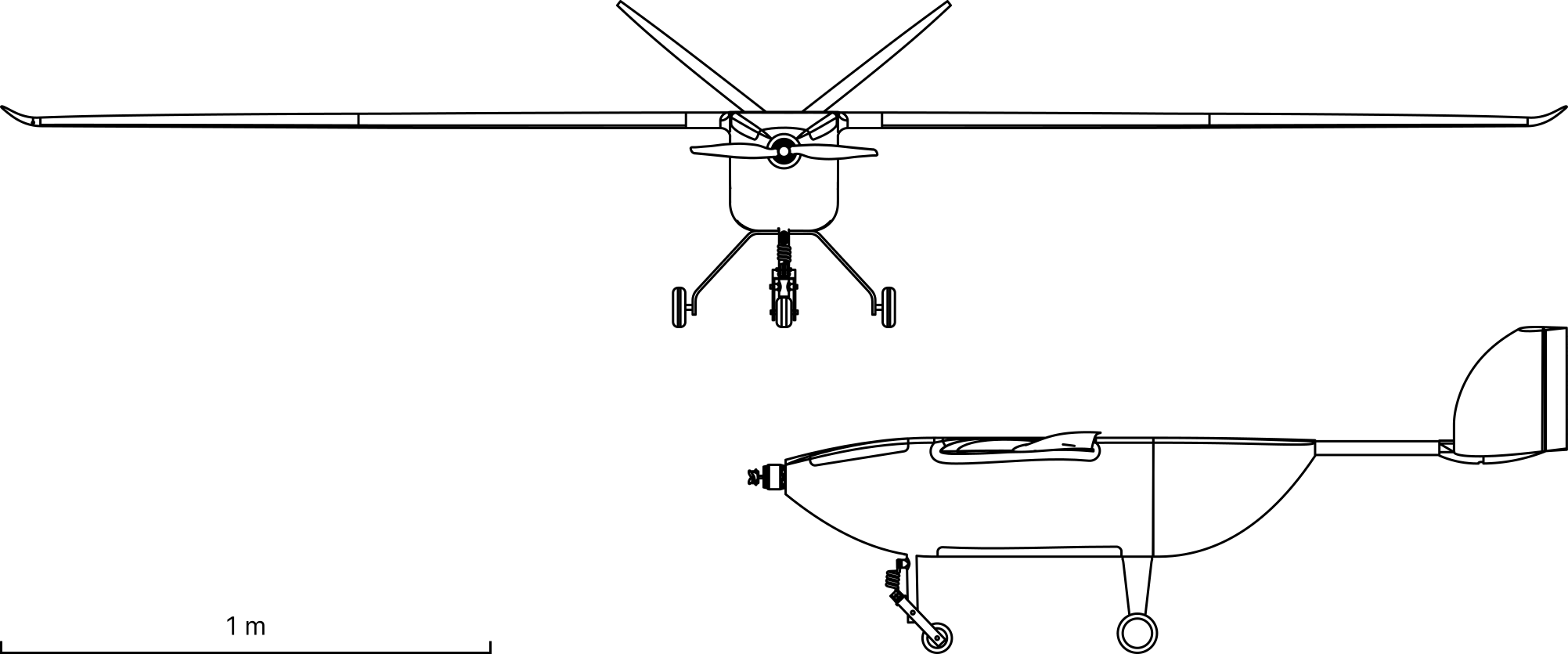
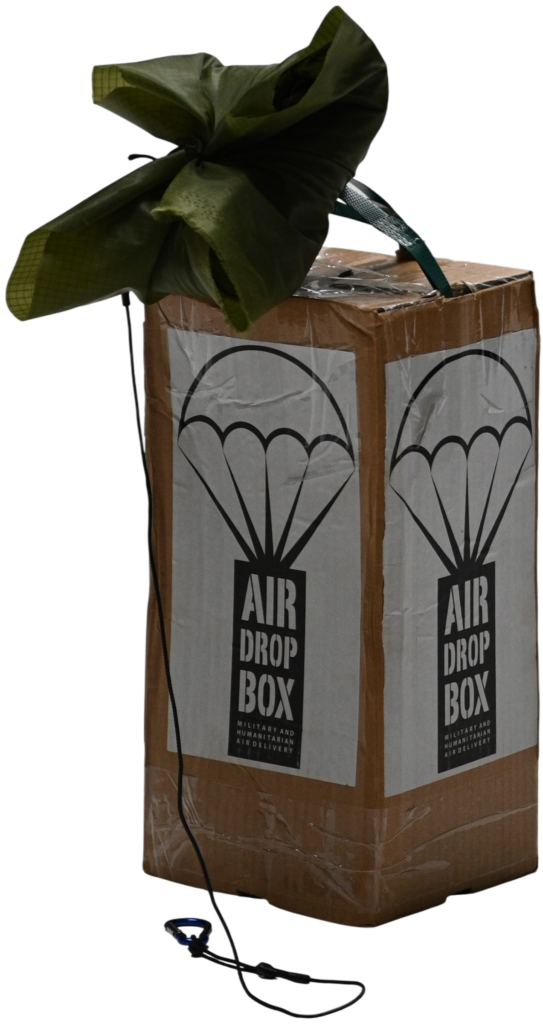
The aircraft adopts a high-wing configuration, with a single tractor propeller and V-tail. During development, fuselage production was a major challenge, leading to a redesign of the structure. The final solution uses carbon fiber bulkheads and a honeycomb core in Nomex, modifying the initially planned construction approach. Another important innovation in the construction process was the introduction of 3D-printed jigs, used to improve alignment and accuracy during the assembly and production phases. The payload consists of a box containing sand, used as cargo to be transported and released during the mission.
One of the most characteristic elements of O.L.I.V.I.A. is the attention paid to the safety and reliability of the systems. The electronic architecture is based on redundancy, the aircraft’s propulsion and control systems are independent and powered by two separate batteries. Furthermore, O.L.I.V.I.A. was in fact designed to be assembled and made ready to fly in less than six minutes, without the use of tools.